Showing posts with label okinawa. Show all posts
Showing posts with label okinawa. Show all posts
Saturday, January 24, 2009
No Bento Here
Well this is going to be an non-bento post. Though, it is Japanese related! On my family blog I am doing a series of posts about Okinawa, Japan and how I feel about leaving her to move back to the states after 6 years of living here. If you are interested in Japanese culture then my posts will definitely be of an interest to you! ENJOY! CLICK HERE TO READ MY FIRST POST titled "Mixed Emotions"


Saturday, November 1, 2008
Okinawan Food
Did you know Okinawans have the highest rate of longevity in all of Japan?The reason cited most often by health experts for the longevity of Okinawans is their diet, which normally consists of generous portions of tofu, kubu (dried kelp) and vegetables. Although tofu and kubu are mainstay ingredients in Okinawan dishes, Okinawans are' also known to consume healthy portions of sweet potato, squash, eggplant, goya (commonly referred to as bittermelon), green papaya, mustard cabbage, daikon (turnip), and somen a thin noodle made of fine wheat flour. Pork is also commonly used in many Okinawan mainstays.
Okinawans are the top pork producers in all of Japan. In fact they are also the top consumers of pork also. So how can Okinawans be the biggest consumers of pork and yet live so long? Research shows that healthy cells also require some fat, and Okinawans prepare their pork in such a way that it enhances health, rather than diminishing it. They boil the fresh pork for about a half-hour to remove much of the fat before using it to prepare a traditional Okinawan pork dish.Rafute, or glazed pork, is a popular Okinawan pork dish that is made with sugar, shoyu and liquor. The preparation actually allows the rafute could keep for several days without spoiling, which was extremely useful to the Okinawans in the days before the invention of refrigeration. Its ability to keep made it was an ideal dish for Okinawa's subtropical climate.Okinawan cookery is distinguished by three unique forms: The foods of the farmers or common people of Okinawa, Naha cooking and Shuri court cooking. The common people of Okinawa consumed lots of sweet potatoes and ate simple meals that could be scraped together from their farm crops. In Naha though existed the largest urban center on the island and it was a port town. To Naha people cooking was considered to be an art and their cuisine was just a notch below the Royal court cuisine of Shuri, the ancient capital of Okinawa.
Traditional Shuri court cooking grew out of Okinawa's trade and diplomatic relations with China. In order to entertain the Chinese investment in trade, the Ryukyu government sent professional court chefs to China to master the art of Chinese cooking so that they could prepare a more palatable cuisine for their honored guests. China's influence on Okinawan cooking is evident through the Okinawans use of beef, pork and fowl as well as some rich sauces.When the Ryukyu Kingdom was subjugated by the Satsuma clan of Kyushu in the early 1600's, it became imperative for the Okinawans to master the art of Japanese cooking. This really served to enrich their native cooking. The attention to detail paid to arranging food which is appealing to the eye is reflective of the influence Japanese cooking had on the traditional Okinawan way of cooking.
It’s only been 100 years since the Ryukyu kingdom of Okinawa was incorporated into Japan and in the southern most islands the Okinawans have been able to maintain their own distinctive culture, language, and cuisine. Okinawan cooking leans toward stronger and spicier flavors than Japanese food and is more heavily influenced by Chinese cooking styles. Pork is a very important ingredient, and every part of the pig is used, from the pig's feet and ears to its pork tripe. Other traditional Okinawan ingredients include local seafood, native tropical vegetables and fruits, Black sugar, and awamori, Okinawan liquor made from rice. Many Okinawan recipes also depend on soy sauce and miso (fermented soybeans). Kooreegusu is a condiment made from red peppers marinated in awamori.
Stir-frying is the most common cooking method used, and Okinawan champuru is basically a stir-fry using some combination of tofu, leeks, and eggs plus other ingredients. Okinawan menus will usually have a number of champuru dishes listed. Another typical dish is rafute. Rafute is pork stewed in miso, soy sauce, sugar, and awamori, which is very similar to a Chinese dish called kakuni. Toofuyoo is a strongly flavored super concentrated tofu concoction that's eaten in tiny bites as a snack while drinking. It's a bit like Velveeta cheese that's been compressed until it's reached an incredibly dense state. (Compliments of chicagookinawakenjinkai)
Okinawans are the top pork producers in all of Japan. In fact they are also the top consumers of pork also. So how can Okinawans be the biggest consumers of pork and yet live so long? Research shows that healthy cells also require some fat, and Okinawans prepare their pork in such a way that it enhances health, rather than diminishing it. They boil the fresh pork for about a half-hour to remove much of the fat before using it to prepare a traditional Okinawan pork dish.Rafute, or glazed pork, is a popular Okinawan pork dish that is made with sugar, shoyu and liquor. The preparation actually allows the rafute could keep for several days without spoiling, which was extremely useful to the Okinawans in the days before the invention of refrigeration. Its ability to keep made it was an ideal dish for Okinawa's subtropical climate.Okinawan cookery is distinguished by three unique forms: The foods of the farmers or common people of Okinawa, Naha cooking and Shuri court cooking. The common people of Okinawa consumed lots of sweet potatoes and ate simple meals that could be scraped together from their farm crops. In Naha though existed the largest urban center on the island and it was a port town. To Naha people cooking was considered to be an art and their cuisine was just a notch below the Royal court cuisine of Shuri, the ancient capital of Okinawa.
Traditional Shuri court cooking grew out of Okinawa's trade and diplomatic relations with China. In order to entertain the Chinese investment in trade, the Ryukyu government sent professional court chefs to China to master the art of Chinese cooking so that they could prepare a more palatable cuisine for their honored guests. China's influence on Okinawan cooking is evident through the Okinawans use of beef, pork and fowl as well as some rich sauces.When the Ryukyu Kingdom was subjugated by the Satsuma clan of Kyushu in the early 1600's, it became imperative for the Okinawans to master the art of Japanese cooking. This really served to enrich their native cooking. The attention to detail paid to arranging food which is appealing to the eye is reflective of the influence Japanese cooking had on the traditional Okinawan way of cooking.
It’s only been 100 years since the Ryukyu kingdom of Okinawa was incorporated into Japan and in the southern most islands the Okinawans have been able to maintain their own distinctive culture, language, and cuisine. Okinawan cooking leans toward stronger and spicier flavors than Japanese food and is more heavily influenced by Chinese cooking styles. Pork is a very important ingredient, and every part of the pig is used, from the pig's feet and ears to its pork tripe. Other traditional Okinawan ingredients include local seafood, native tropical vegetables and fruits, Black sugar, and awamori, Okinawan liquor made from rice. Many Okinawan recipes also depend on soy sauce and miso (fermented soybeans). Kooreegusu is a condiment made from red peppers marinated in awamori.
Stir-frying is the most common cooking method used, and Okinawan champuru is basically a stir-fry using some combination of tofu, leeks, and eggs plus other ingredients. Okinawan menus will usually have a number of champuru dishes listed. Another typical dish is rafute. Rafute is pork stewed in miso, soy sauce, sugar, and awamori, which is very similar to a Chinese dish called kakuni. Toofuyoo is a strongly flavored super concentrated tofu concoction that's eaten in tiny bites as a snack while drinking. It's a bit like Velveeta cheese that's been compressed until it's reached an incredibly dense state. (Compliments of chicagookinawakenjinkai)
Tuesday, October 21, 2008
FRESH IN OKI

 I wanted to share my wonderful experience with FRESH IN OKI! I received my 1st delivery today! Fresh In Oki is a great fruit and vege delivery service here on Okinawa! The freshest of fruit and veges are brought right to your front door! For an extra $5 you can have tropical flowers delivered along with your fruit/veges! HOW FABULOUS is that!!! I was thrilled when my bag arrived! I ordered the "HYBRID" which is a fruit/vege mix bag! I just wanted to share the pic of my goodies and flowers!
 Saturday, September 20, 2008
Furikake????
Furika what>>>. FURIKAKE! Since it is the weekend and I am not packing bento for the kids I thought I would do a post on Furikake and how you can use it in making your O-bento!
Furikake seasoning is like the salt and pepper of Japan. If you aren't "seasoned" on this Japanese seasoning - here's a little lesson on furikake. Nori Furikake consists mostly of seaweed and is used just like salt. Made from shaved bonito, Seto Furikake is a tasty seasoning for salads, soups, and fish. And Oomori Rice Ball Furikake turns an average rice ball into a colorful feast for the eyes.
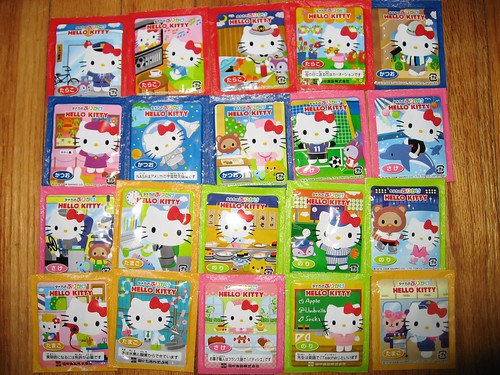
You can buy Furikake for kids bento that come in small individual packets and come in many different flavors, such as vege, egg, salmon, seaweed etc. Click HERE to see pics of Hello Kitty furikake! Kids love to have a little packet of it in their bento so they can sprinkle it on their rice!
If you are here on Okinawa finding Furikake is as easy as going to the local San-A, Jusco or even the 100Yen Store! If you are stateside then it is as easy as ordering online by clicking HERE!
Furikake seasoning is like the salt and pepper of Japan. If you aren't "seasoned" on this Japanese seasoning - here's a little lesson on furikake. Nori Furikake consists mostly of seaweed and is used just like salt. Made from shaved bonito, Seto Furikake is a tasty seasoning for salads, soups, and fish. And Oomori Rice Ball Furikake turns an average rice ball into a colorful feast for the eyes.
You can buy Furikake for kids bento that come in small individual packets and come in many different flavors, such as vege, egg, salmon, seaweed etc. Click HERE to see pics of Hello Kitty furikake! Kids love to have a little packet of it in their bento so they can sprinkle it on their rice!
If you are here on Okinawa finding Furikake is as easy as going to the local San-A, Jusco or even the 100Yen Store! If you are stateside then it is as easy as ordering online by clicking HERE!
Subscribe to:
Posts (Atom)